

Botox vs. Dysport vs. Sculptra: Which Aesthetic Treatment is for You?
Choosing the right aesthetic intervention requires understanding the distinct biological mechanisms behind each product. According to the American Society of Plastic Surgeons, over 1.6 million neurotoxin procedures were performed in 2023, highlighting a massive shift toward non-surgical rejuvenation. However, not all treatments work the same way. At Genesis Wellness & Aesthetics in Boca Raton, we bridge the gap between luxury aesthetics and rigorous medical science to help you make an informed choice. (About Diana Ferriani APRN)
Understanding the Core Mechanisms
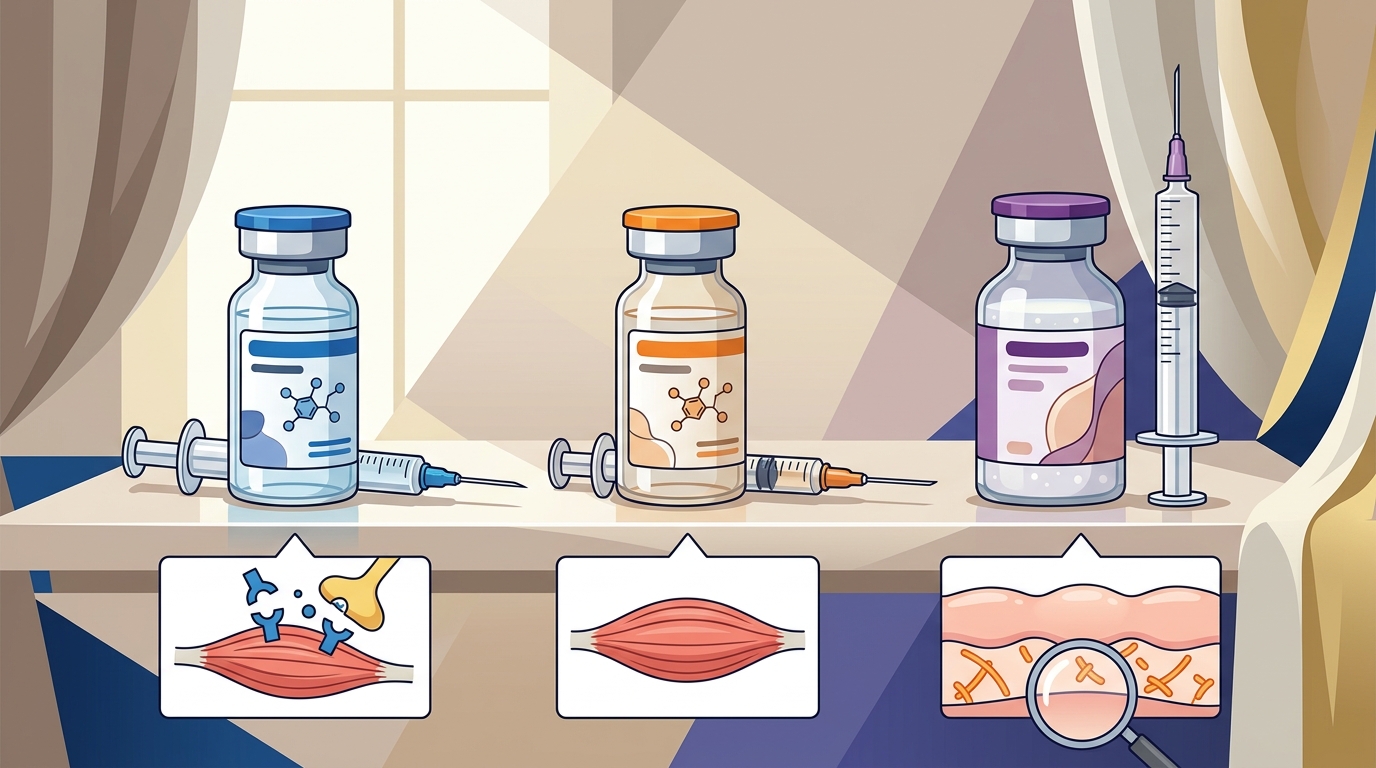
To compare these treatments effectively, we must first define what they are. Neurotoxins are injectable proteins that temporarily relax specific facial muscles to smooth dynamic wrinkles. This category includes Botox and Dysport. They do not add volume; they stop movement. (Genesis Wellness amp Aesthetics)
In contrast, Biostimulators are injectable substances that trigger your body to produce its own collagen and elastin. Sculptra falls into this category. It does not freeze muscles but rather rebuilds the structural foundation of the face over time. Understanding this distinction is critical for setting realistic expectations.
At Genesis Wellness, we utilize a science-driven approach. We do not believe in a one-size-fits-all solution. Instead, we analyze your unique facial anatomy to determine whether you need muscle relaxation, volume restoration, or a combination of both.
Neurotoxins: Botox vs. Dysport
Botox and Dysport are both botulinum toxin type A products. They work by blocking the signal between the nerve and the muscle. However, there are subtle differences in how they spread and how quickly they take effect.
Botox: The Gold Standard
Botox is the most widely recognized and studied neurotoxin in the world. It is known for its precision and predictability. We use precision micro-dosing to soften expression lines, including crow's feet, forehead lines, and frown lines, without removing your ability to express emotion. The goal is a "rested" and youthful look, never frozen.
Botox typically takes three to five days to show initial results, with full effects visible after two weeks. It is ideal for patients who want controlled, targeted correction of specific lines.
Dysport: Faster Onset, Wider Spread
Dysport has a smaller molecular weight, which allows it to diffuse more easily into the surrounding tissue. This makes it particularly effective for treating broader areas, such as the forehead or large frown lines. Some patients report feeling the effects of Dysport slightly faster than Botox, often within 24 to 48 hours.
Both Botox and Dysport are temporary, lasting approximately three to four months. The choice between them often comes down to personal preference and the specific anatomy of the treatment area. Explore our Aesthetic Medicine services to learn more about how we tailor these treatments.
Sculptra: The Biostimulator Advantage
Sculptra is fundamentally different from Botox and Dysport. It is not a filler in the traditional sense, nor is it a neurotoxin. It is a poly-L-lactic acid (PLLA) biostimulator. When injected, it stimulates your body's natural collagen production to gradually restore volume and firmness.
Restoring the Foundation
As we age, we lose collagen and fat pads, leading to sagging and hollowing. Sculptra addresses this by rebuilding the structural foundation of the face. It is ideal for holistic, long-term anti-aging, particularly in the cheeks, temples, and jawline.
Unlike fillers that provide immediate volume, Sculptra works gradually. Results typically appear over several months and can last up to two years or more. This makes it a powerful option for patients seeking a natural, progressive rejuvenation rather than an instant fix.
For those interested in regenerative approaches, Discover Regenerative Care options that complement aesthetic treatments for comprehensive rejuvenation.
Comparative Analysis Table
The following table summarizes the key differences between these three popular treatments to help you decide which is best for your goals.
| Feature | Botox | Dysport | Sculptra |
|---|---|---|---|
| Primary Function | Relaxes muscles to smooth dynamic wrinkles | Relaxes muscles with wider diffusion | Stimulates collagen to restore volume |
| Best For | Frown lines, crow's feet, forehead lines | Forehead lines, large frown areas | Hollow cheeks, temple volume, jawline |
| Onset of Results | 3-5 days | 24-48 hours | Gradual (weeks to months) |
| Duration | 3-4 months | 3-4 months | Up to 2+ years |
| Nature of Results | Smooth, relaxed appearance | Smooth, natural movement | Restored structure and firmness |
Key Takeaways
- Neurotoxins vs. Biostimulators: Botox and Dysport stop muscle movement to smooth wrinkles, while Sculptra rebuilds collagen to restore lost volume.
- Speed of Results: Dysport often works fastest (24-48 hours), followed by Botox (3-5 days). Sculptra results are gradual and cumulative.
- Longevity: Neurotoxins require maintenance every 3-4 months. Sculptra results can last up to two years, making it a longer-term investment.
- Target Areas: Use neurotoxins for dynamic lines (forehead, eyes). Use Sculptra for static volume loss (cheeks, temples, jawline).
- Personalized Care: At Genesis Wellness, we often combine these treatments for a harmonious result, addressing both movement and structure.
- Expert Administration: Results depend heavily on the injector's skill. Our clinic is led by Diana Ferriani, APRN, ensuring precision and safety.
- Natural Aesthetic: All three treatments, when administered correctly, aim for a "restored" look that respects your natural facial anatomy.
Frequently Asked Questions
Can I get Botox and Sculptra in the same session?
Yes, it is common to combine neurotoxins and biostimulators. Botox can relax muscles that might interfere with the even distribution of Sculptra, while Sculptra restores volume that Botox cannot address. This combined approach often yields the most comprehensive rejuvenation.
Which is better for forehead lines, Botox or Dysport?
Both are highly effective. Dysport may spread more evenly across the broad forehead area, while Botox offers precise control. Your practitioner will assess your muscle strength and desired outcome to recommend the best option.
How long does Sculptra last compared to fillers?
Sculptra typically lasts longer than traditional hyaluronic acid fillers. While fillers may last 6-12 months, Sculptra results can persist for two years or more because it stimulates your body's own collagen production.
Is there downtime for these treatments?
Neurotoxins have minimal to no downtime. You may experience slight redness or bruising. Sculptra may require more massage of the treated area to ensure even distribution and may have more visible swelling or bruising initially.
Who is the best candidate for Sculptra?
Sculptra is ideal for patients with moderate to severe volume loss who want a natural, gradual improvement. It is not suitable for those seeking immediate, dramatic volume changes, which are better addressed by traditional fillers.
Why choose a boutique clinic like Genesis Wellness?
Unlike high-volume medspas, our boutique model allows Diana Ferriani and her team to provide personalized, concierge-level care. We focus on long-term results that help you feel strong, capable, and restored.
How do I know which treatment I need?
The best way to determine your ideal treatment is through a consultation. We analyze your facial anatomy, skin quality, and aesthetic goals to create a customized plan that respects your features.
Start Your Journey
Ready to reclaim your energy and confidence? Whether you are considering Botox, Dysport, or Sculptra, the first step is a professional assessment. At Genesis Wellness & Aesthetics, we provide a true prescriptive luxury experience. We invite you to Schedule Your Consultation today and discover the personalized care that defines our practice.